
Lucie POULIN
Maître de conférences Université
section 67
| Équipe : |
Thèmes de recherche
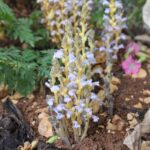
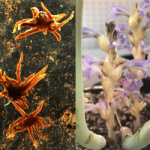
Je réalise mes activités de recherche sur les interactions multipartites entre plantes parasites (avec l’orobanche rameuse comme modèle), leurs plantes hôtes et les micro-organismes associés à cette interaction (microbiote du sol, de la rhizosphère, de la graine, des racines…). Je cherche notamment à comprendre le rôle du microbiote dans les étapes précoces et clées du cycle biologique de l’orobanche rameuse à l’aide d’approches larges de type méta-omiques ou plus ciblées via de la microbiologie pasteurienne et des approches mutants.
Projets




Parcours universitaire
2014 : PhD en microbiologie et pathologie végétale à l’IRD de Montpellier,FR
2011 : Master en Biologie des interactions microbiennes et parasites (Université de Montpellier 2, FR)
Publications
1 publication
Sicard, Anne; Carpenter, Sara C. D.; Diallo, Amadou; Baruah, Shivranjani; Tekete, Cheick; Konate, Lazeni; Keita, Ibrahim; Doucoure, Hinda; Nguyen, Phuong Duy; Cao, Quyen Le; Sarra, Soungalo; Dembele, Mamadou; Tollenaere, Charlotte; Poulin, Lucie; Tall, Hamidou; Blondin, Laurence; Verdier, Valérie; Koebnik, Ralf; Zougrana, Sylvain; Raveloson, Harinjaka; Gagnevin, Lionel; Onaga, Geoffrey; Cunnac, Sebastien; Vernière, Christian; Wonni, Issa; Koita, Ousmane; Szurek, Boris; Bogdanove, Adam; Hutin, Mathilde
Large- and small-scale population structure of Xanthomonas oryzae pv. oryzicola , a bacterial pathogen of rice Article de journal
Dans: Appl Environ Microbiol, vol. 91, no. 10, 2025, ISSN: 1098-5336.
@article{Sicard2025,

title = {Large- and small-scale population structure of                    \textit{Xanthomonas oryzae}                    pv.                    \textit{oryzicola}                    , a bacterial pathogen of rice},

author = {Anne Sicard and Sara C. D. Carpenter and Amadou Diallo and Shivranjani Baruah and Cheick Tekete and Lazeni Konate and Ibrahim Keita and Hinda Doucoure and Phuong Duy Nguyen and Quyen Le Cao and Soungalo Sarra and Mamadou Dembele and Charlotte Tollenaere and Lucie Poulin and Hamidou Tall and Laurence Blondin and Valérie Verdier and Ralf Koebnik and Sylvain Zougrana and Harinjaka Raveloson and Lionel Gagnevin and Geoffrey Onaga and Sebastien Cunnac and Christian Vernière and Issa Wonni and Ousmane Koita and Boris Szurek and Adam Bogdanove and Mathilde Hutin},

editor = {Gladys Alexandre},

url = {https://hal.science/hal-05248727v1},

doi = {10.1128/aem.01121-25},

issn = {1098-5336},

year  = {2025},

date = {2025-10-22},

urldate = {2025-10-22},

journal = {Appl Environ Microbiol},

volume = {91},

number = {10},

publisher = {American Society for Microbiology},

abstract = {<jats:title>ABSTRACT</jats:title>

                  <jats:sec>

                    <jats:title/>

                    <jats:p>

                      <jats:italic toggle="yes">Xanthomonas oryzae</jats:italic>

                      pv.

                      <jats:italic toggle="yes">oryzicola</jats:italic>

                      is a pathogen of rice responsible for bacterial leaf streak, a disease that can cause up to 32% yield loss. While it was first reported a century ago in Asia, its first report in Africa was in the 1980s. Since then, it has been discovered in several countries of both East and West Africa. In this study, we used a combination of genomics and genotyping tools to shed light on its global and local diversity and population structure with a focus on West Africa. Our findings group

                      <jats:italic toggle="yes">X. oryzae</jats:italic>

                      pv.

                      <jats:italic toggle="yes">oryzicola</jats:italic>

                      strains into three clades, an Asian, an East African-Asian, and a West African clade, and provide evidence of several introduction events from Asia being at the origin of outbreaks in East Africa and probably in West Africa. Our results further highlight the role of human activities in the local spread of this pathogen and the possible role of several wild rice species and weeds as reservoirs. Finally, our results globally support a clonal evolution of

                      <jats:italic toggle="yes">X. oryzae</jats:italic>

                      pv.

                      <jats:italic toggle="yes">oryzicola</jats:italic>

                      . However, coinfection of plants with distinct strains of

                      <jats:italic toggle="yes">X. oryzae</jats:italic>

                      pv.

                      <jats:italic toggle="yes">oryzicola</jats:italic>

                      , observed in Mali and Senegal, may facilitate some degree of genetic exchange.

                    </jats:p>

                    <jats:sec>

                      <jats:title>IMPORTANCE</jats:title>

                      <jats:p>

                        West Africa has faced a rapid expansion of rice cultivation with importation of rice varieties mostly from Asia, and rice now constitutes 37% of the cereal consumed in the region. The bacterial pathogen

                        <jats:italic toggle="yes">Xanthomonas oryzae</jats:italic>

                        pv.

                        <jats:italic toggle="yes">oryzicola</jats:italic>

                        (

                        <jats:italic toggle="yes">Xoc</jats:italic>

                        ) is causing bacterial leaf streak and threatening rice production in West Africa. Little is known about the pathogen’s reservoirs and its modes and routes of dissemination. We used genome sequencing and tandem repeat sequences to describe large- and small-scale population structure and molecular epidemiology. Our results support the role of rice seed trade in the local and global spread of

                        <jats:italic toggle="yes">Xoc</jats:italic>

                        . This study further suggests different introduction events from Asia to both East and West Africa. We describe local natural dispersal events with some clonal diversification and the possible role of wild rice and weed species as reservoirs. Overall, our results indicate that weed management and the enforcement of phytosanitary measures on rice seeds could help control the spread of bacterial leaf streak.

                      </jats:p>

                    </jats:sec>

                  </jats:sec>},

keywords = {},

pubstate = {published},

tppubtype = {article}

}
<jats:sec>
<jats:title/>
<jats:p>
<jats:italic toggle="yes">Xanthomonas oryzae</jats:italic>
pv.
<jats:italic toggle="yes">oryzicola</jats:italic>
is a pathogen of rice responsible for bacterial leaf streak, a disease that can cause up to 32% yield loss. While it was first reported a century ago in Asia, its first report in Africa was in the 1980s. Since then, it has been discovered in several countries of both East and West Africa. In this study, we used a combination of genomics and genotyping tools to shed light on its global and local diversity and population structure with a focus on West Africa. Our findings group
<jats:italic toggle="yes">X. oryzae</jats:italic>
pv.
<jats:italic toggle="yes">oryzicola</jats:italic>
strains into three clades, an Asian, an East African-Asian, and a West African clade, and provide evidence of several introduction events from Asia being at the origin of outbreaks in East Africa and probably in West Africa. Our results further highlight the role of human activities in the local spread of this pathogen and the possible role of several wild rice species and weeds as reservoirs. Finally, our results globally support a clonal evolution of
<jats:italic toggle="yes">X. oryzae</jats:italic>
pv.
<jats:italic toggle="yes">oryzicola</jats:italic>
. However, coinfection of plants with distinct strains of
<jats:italic toggle="yes">X. oryzae</jats:italic>
pv.
<jats:italic toggle="yes">oryzicola</jats:italic>
, observed in Mali and Senegal, may facilitate some degree of genetic exchange.
</jats:p>
<jats:sec>
<jats:title>IMPORTANCE</jats:title>
<jats:p>
West Africa has faced a rapid expansion of rice cultivation with importation of rice varieties mostly from Asia, and rice now constitutes 37% of the cereal consumed in the region. The bacterial pathogen
<jats:italic toggle="yes">Xanthomonas oryzae</jats:italic>
pv.
<jats:italic toggle="yes">oryzicola</jats:italic>
(
<jats:italic toggle="yes">Xoc</jats:italic>
) is causing bacterial leaf streak and threatening rice production in West Africa. Little is known about the pathogen’s reservoirs and its modes and routes of dissemination. We used genome sequencing and tandem repeat sequences to describe large- and small-scale population structure and molecular epidemiology. Our results support the role of rice seed trade in the local and global spread of
<jats:italic toggle="yes">Xoc</jats:italic>
. This study further suggests different introduction events from Asia to both East and West Africa. We describe local natural dispersal events with some clonal diversification and the possible role of wild rice and weed species as reservoirs. Overall, our results indicate that weed management and the enforcement of phytosanitary measures on rice seeds could help control the spread of bacterial leaf streak.
</jats:p>
</jats:sec>
</jats:sec>
2 publications
Bendejacq-Seychelles, Ana; Martinez, Lisa; Corréard, Anaïs; Totozafy, Jean Chrisologue; Steinberg, Christian; Pouvreau, Jean-Bernard; Reibel, Carole; Mouille, Grégory; Mondy, Samuel; Poulin, Lucie; Gibot-Leclerc, Stéphanie
Image Analysis and Untargeted Metabolomics Reveal Potential Phytotoxins from Against Major Parasitic Weed (L.) Pomel Article de journal
Dans: Toxins (Basel), vol. 16, no. 12, 2024, ISSN: 2072-6651.
@article{pmid39728789,

title = {Image Analysis and Untargeted Metabolomics Reveal Potential Phytotoxins from  Against Major Parasitic Weed  (L.) Pomel},

author = {Ana Bendejacq-Seychelles and Lisa Martinez and Anaïs Corréard and Jean Chrisologue Totozafy and Christian Steinberg and Jean-Bernard Pouvreau and Carole Reibel and Grégory Mouille and Samuel Mondy and Lucie Poulin and Stéphanie Gibot-Leclerc},

url = {https://hal.science/hal-04871024v1},

doi = {10.3390/toxins16120531},

issn = {2072-6651},

year  = {2024},

date = {2024-12-01},

urldate = {2024-12-01},

journal = {Toxins (Basel)},

volume = {16},

number = {12},

abstract = {Branched broomrape ( (L.) Pomel), an obligate parasitic weed with a wide host range, is known for its devasting effects on many crops worldwide. Soil fungi, notably  sp., are described as pathogenic to broomrape, while the hypothesis of the phytotoxicity of fusaric acid produced by  for parasitic weeds of the genus  has been proposed. Using image analysis and untargeted metabolomics, this study investigated fungal metabolites phytotoxic for  and produced by the  MIAE02836 strain, isolated from symptomatic broomrapes and identified as a promising candidate for broomrape biocontrol. Phytotoxicity tests of crude extracts from the fungus alone or in interaction with broomrape on  microcalli and quantification of necrosis by image analysis confirmed the phytotoxic potential of  MIAE02836 metabolites towards the early developmental stages of . Data analysis of a non-targeted metabolomics approach revealed numerous metabolites produced by  MIAE02836. Four of them, accumulated during interaction with the parasitic plant, are known for their phytotoxic potential: maculosin, cyclo(Leu-Phe), phenylalanyl-D-histidine and anguidine. These results suggest that combining image acquisition of the microcalli screening test and untargeted metabolomic approach is an interesting and relevant method to characterize phytotoxic fungal metabolites.},

keywords = {},

pubstate = {published},

tppubtype = {article}

}
Martinez, Lisa; Pouvreau, Jean-Bernard; Jestin, Christophe; Montiel, Gregory; Gravot, Antoine; Berardocco, Solenne; Marnet, Nathalie; Bouchereau, Alain; Delage, Erwan; Simier, Philippe; Poulin, Lucie
Comparative Analysis of Two Neighboring Conducive and Suppressive Soils Toward Plant Parasitism Caused by Phelipanche ramosa on Brassica napus Article de journal
Dans: Phytobiomes Journal, vol. 8, no. 4, p. 425–445, 2024, ISSN: 2471-2906.
@article{Martinez2024,

title = {Comparative Analysis of Two Neighboring Conducive and Suppressive Soils Toward Plant Parasitism Caused by \textit{Phelipanche ramosa} on \textit{Brassica napus}},

author = {Lisa Martinez and Jean-Bernard Pouvreau and Christophe Jestin and Gregory Montiel and Antoine Gravot and Solenne Berardocco and Nathalie Marnet and Alain Bouchereau and Erwan Delage and Philippe Simier and Lucie Poulin},

url = {https://hal.science/hal-04835386v1},

doi = {10.1094/pbiomes-12-23-0140-r},

issn = {2471-2906},

year  = {2024},

date = {2024-11-00},

urldate = {2024-11-00},

journal = {Phytobiomes Journal},

volume = {8},

number = {4},

pages = {425--445},

publisher = {Scientific Societies},

abstract = {<jats:p> In Western France, rapeseed ( Brassica napus) cultivation faces substantial yield losses due to the root holoparasitic plant Phelipanche ramosa. However, recent observations have shown a reduction in parasitism within previously heavily infested fields. This study investigates two neighboring rapeseed soils with distinct levels of parasitic infestation, considered suppressive and conducive. Using a cocultivation system of Brassica napus and P. ramosa, we comprehensively examined rhizosphere exudates, parasitic plant attachment, and rhizosphere soil microbiota. Our findings revealed that the suppressive soil effectively reduced parasitism by impeding broomrape attachment and development, as well as inducing necrosis of tubercles. This suppressive effect was specific to postattachment stages, leaving germination and haustoriogenesis preattachment stages unaffected. Analysis of microbial structures suggested that the suppression of parasitism is predominantly of fungal rather than bacterial origin. Correlation network analyses identified three groups of amplicon sequence variants (ASVs) associated with suppression. Notably, seven ASVs were inversely correlated with parasitic attachments, and only one ASV, identified as Berkeleyomyces, a necrotrophic fungus responsible for black root rot, was positively correlated with necrosis and was more abundant in the suppressive soil. This study demonstrates the contrasting parasitic plant development on two physicochemically similar soils, highlighting the central role of fungal dynamics in the rhizosphere. These results provide valuable insights into the mechanisms underlying soil-mediated suppression of P. ramosa, offering potential strategies for mitigating the impact of this root holoparasite on rapeseed yields in the region. </jats:p>},

keywords = {},

pubstate = {published},

tppubtype = {article}

}
1 publication
Martinez, Lisa; Pouvreau, Jean-Bernard; Montiel, Gregory; Jestin, Christophe; Delavault, Philippe; Simier, Philippe; Poulin, Lucie
Soil microbiota promotes early developmental stages of Phelipanche ramosa L. Pomel during plant parasitism on Brassica napus L. Article de journal
Dans: Plant and Soil, vol. 483, p. 667–691 , 2023.
@article{martinez2022soil,

title = {Soil microbiota promotes early developmental stages of Phelipanche ramosa L. Pomel during plant parasitism on Brassica napus L.},

author = {Lisa Martinez and Jean-Bernard Pouvreau and Gregory Montiel and Christophe Jestin and Philippe Delavault and Philippe Simier and Lucie Poulin},

url = {https://hal.science/hal-04370677v1},

doi = {https://doi.org/10.1007/s11104-022-05822-6},

year  = {2023},

date = {2023-01-08},

urldate = {2023-01-08},

journal = {Plant and Soil},

volume = {483},

pages = {667–691 },

publisher = {Springer},

abstract = {Purpose

The root holoparasitic plant Phelipanche ramosa has become a major constraint for rapeseed cultivation in western France for the last decades and its control remains challenging. To date, few studies have considered soil microbiota as a third partner of the parasitic plant-plant interaction. Therefore, we here addressed the question of how soil microbiota interferes with host-derived signal metabolites required for host plant recognition by the parasitic plant.


Methods

Using a branched broomrape infested soil (genetic group 1) from a rapeseed field, we first provided soil physicochemical and microbiological descriptions by metabarcoding, followed by P. ramosa seed germination and prehaustorium formation bioassays, and by in vitro co-cultivation with Brassica napus.


Results

Co-cultivation in presence of soil microorganisms promoted parasitic plant seed germination and attachments to host’s roots. Seed germination assays showed that only the combination of gluconasturtiin (main rapeseed glucosinolate) with soil extracts stimulated broomrape germination. This suggests a microbial conversion of gluconasturtiin into germination stimulants via soil microbial myrosinase enzymes. Furthermore, soil bacteria Arthrobacter, Ralstonia, Actinobacterium, Proteobacterium spp. and fungus Penicillium spp. were isolated and screened for myrosinase activity. Pre-germinated seeds treated with soil extracts or differentially filtrated soil extracts also promoted the formation of P. ramosa prehaustorium and led to more parasitic attachments on rapeseed roots in co-cultivation assays. This thus suggests that this enhancement of parasitic attachments could also be partly attributed to soil microbial production of haustorium inducing factors.


Conclusion

Soil microbiota influences B. napus - P. ramosa interaction by altering direct and indirect recognition signals.},

keywords = {},

pubstate = {published},

tppubtype = {article}

}
The root holoparasitic plant Phelipanche ramosa has become a major constraint for rapeseed cultivation in western France for the last decades and its control remains challenging. To date, few studies have considered soil microbiota as a third partner of the parasitic plant-plant interaction. Therefore, we here addressed the question of how soil microbiota interferes with host-derived signal metabolites required for host plant recognition by the parasitic plant.
Methods
Using a branched broomrape infested soil (genetic group 1) from a rapeseed field, we first provided soil physicochemical and microbiological descriptions by metabarcoding, followed by P. ramosa seed germination and prehaustorium formation bioassays, and by in vitro co-cultivation with Brassica napus.
Results
Co-cultivation in presence of soil microorganisms promoted parasitic plant seed germination and attachments to host’s roots. Seed germination assays showed that only the combination of gluconasturtiin (main rapeseed glucosinolate) with soil extracts stimulated broomrape germination. This suggests a microbial conversion of gluconasturtiin into germination stimulants via soil microbial myrosinase enzymes. Furthermore, soil bacteria Arthrobacter, Ralstonia, Actinobacterium, Proteobacterium spp. and fungus Penicillium spp. were isolated and screened for myrosinase activity. Pre-germinated seeds treated with soil extracts or differentially filtrated soil extracts also promoted the formation of P. ramosa prehaustorium and led to more parasitic attachments on rapeseed roots in co-cultivation assays. This thus suggests that this enhancement of parasitic attachments could also be partly attributed to soil microbial production of haustorium inducing factors.
Conclusion
Soil microbiota influences B. napus - P. ramosa interaction by altering direct and indirect recognition signals.
1 publication
Pouvreau, Jean-Bernard; Poulin, Lucie; Huet, Sarah; Delavault, Philippe
Strigolactone-Like Bioactivity via Parasitic Plant Germination Bioassay Article de journal
Dans: Methods Mol Biol, vol. 2309, p. 59–73, 2021, ISSN: 1940-6029.
@article{pmid34028679b,

title = {Strigolactone-Like Bioactivity via Parasitic Plant Germination Bioassay},

author = {Jean-Bernard Pouvreau and Lucie Poulin and Sarah Huet and Philippe Delavault},

doi = {10.1007/978-1-0716-1429-7_6},

issn = {1940-6029},

year  = {2021},

date = {2021-01-01},

urldate = {2021-01-01},

journal = {Methods Mol Biol},

volume = {2309},

pages = {59--73},

abstract = {Strigolactones are a class of plant hormones involved in shoot branching, growth of symbiotic arbuscular mycorrhizal fungi, and germination of parasitic plant seeds. Assaying new molecules or compound exhibiting strigolactone-like activities is therefore important but unfortunately time-consuming and hard to implement because of the extremely low concentrations at which they are active. Seeds of parasite plants are natural integrator of these hormones since they can perceive molecule concentrations in the picomolar to nanomolar range stimulating their germination. Here we describe a simple and inexpensive method to evaluate the activity of these molecules by scoring the germination of parasitic plant seeds upon treatment with these molecules. Up to four molecules can be assayed from a single 96-well plate by this method. A comparison of SL-like bioactivities between molecules is done by determining the EC50 and the maximum percentage of germination.},

keywords = {},

pubstate = {published},

tppubtype = {article}

}
1 publication
Huet, Sarah; Pouvreau, Jean-Bernard; Delage, Erwan; Delgrange, Sabine; Marais, Coralie; Bahut, Muriel; Delavault, Philippe; Simier, Philippe; Poulin, Lucie
Populations of the Parasitic Plant Influence Their Seed Microbiota Article de journal
Dans: Front Plant Sci, vol. 11, p. 1075, 2020, ISSN: 1664-462X.
@article{pmid32765559,

title = {Populations of the Parasitic Plant  Influence Their Seed Microbiota},

author = {Sarah Huet and Jean-Bernard Pouvreau and Erwan Delage and Sabine Delgrange and Coralie Marais and Muriel Bahut and Philippe Delavault and Philippe Simier and Lucie Poulin},

doi = {10.3389/fpls.2020.01075},

issn = {1664-462X},

year  = {2020},

date = {2020-01-01},

urldate = {2020-01-01},

journal = {Front Plant Sci},

volume = {11},

pages = {1075},

abstract = {Seeds of the parasitic weed  are well adapted to their hosts because they germinate and form haustorial structures to connect to roots in response to diverse host-derived molecular signals.  presents different genetic groups that are preferentially adapted to certain hosts. Since there are indications that microbes play a role in the interaction especially in the early stages of the interaction, we studied the microbial diversity harbored by the parasitic seeds with respect to their host and genetic group. Twenty-six seed lots from seven cropping plots of three different hosts-oilseed rape, tobacco, and hemp-in the west of France were characterized for their bacterial and fungal communities using 16S rRNA gene and ITS (Internal transcribed spacer) sequences, respectively. First seeds were characterized genetically using twenty microsatellite markers and phenotyped for their sensibility to various germination stimulants including strigolactones and isothiocyanates. This led to the distinction of three  groups that corresponded to their host of origin. The observed seed diversity was correlated to the host specialization and germination stimulant sensitivity within  species. Microbial communities were both clustered by host and plot of origin. The seed core microbiota was composed of seventeen species that were also retrieved from soil and was in lower abundances for bacteria and similar abundances for fungi compared to seeds. The host-related core microbiota of parasitic seeds was limited and presumably well adapted to the interaction with its hosts. Two microbial candidates of  species and  were especially identified in seeds from oilseed rape plots, suggesting their involvement in host recognition and specialization as well as seed fitness for  by improving the production of isothiocyanates from glucosinolates in the rhizosphere of oilseed rape.},

keywords = {},

pubstate = {published},

tppubtype = {article}

}
Stagiaires encadrés :
- Jeanne FANTIN, Ingénieure en Biotechnologies, SUPBIOTECH (Institut Supérieur des Biotechnologies)
- Nouara AID, M2 BioInformatique pour les biologistes, Nantes Université