Understanding xenobiotic-intestinal barrier interactions by assessing the morphological, structural, and functional properties of the intestinal barrier using predictive in vitro models
| Responsables(s) : | Financement(s) : |
|---|---|
- Début du projet : 09/07/2026
- Fin du projet : 13/07/2028
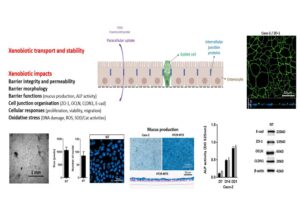
A large number of environmental factors, particularly xenobiotics (food compounds, chemicals and pollutants, pharmaceuticals, etc.), can adversely affect human health. Whether intentionally administered as medical treatments or unintentionally encountered as molecules present in the environment, understanding the behavior and impact of these xenobiotics, particularly on the biological barriers they encounter within the body, remains a major challenge. Alterations of these biological barriers can contribute to the development of various pathologies. Moreover, they play a key role in the biodistribution and efficacy of diagnostic and therapeutic agents. Our research focuses on the intestinal barrier, the body’s primary interface with the external environment. In line with the 3Rs principles, we aim to address these challenges using predictive alternative in vitro methods. To this end, we have established in vitro models to assess the effects of xenobiotics and pathological conditions on the morphological, structural, and functional properties of the intestinal barrier.